Erasmus+, Klíčová Akce 1: tréninkový kurz
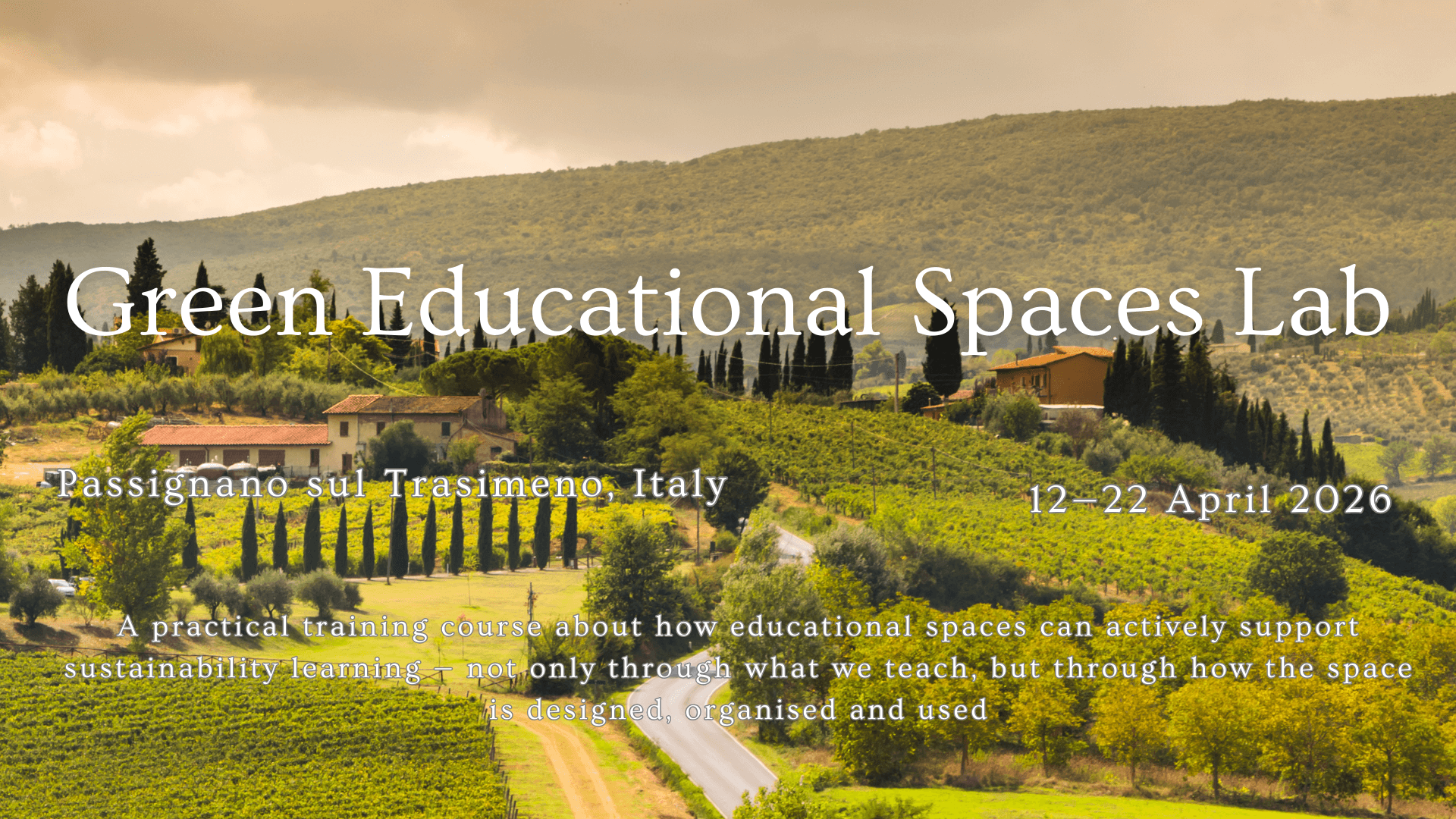
Termín konání: 12.—22. duben 2026
Místo konání: Passignano sul Trasimeno, Itálie
Český tým: 2 účastníci – pracovníci s mládeží (ve věku 18+)
Před tím, než se přihlásíte na jakýkoliv náš projekt, důkladně si přečtěte všechny informace v sekci Chci vyjet na projekt a seznamte se s Pravidly účasti na zahr. projektech.
Pokud máte zájem se na tento projekt přihlásit, prosím důkladně si přečtete informace v info-packu a koncept projektu. Pokud máte zájem se na tento projekt přihlásit, prosím odešlete vyplněnou přihlášku co nejdříve.
Pro to, abyste se na tento projekt přihlásili je nutné, abyste vlastnili nejen občanský průkaz (který musíte mít ze zákona), ale také platný cestovní pas (s platností min. ještě 150 dní od datumu začátku vámi vybraného projektu).
V rámci programu ERASMUS+ jsou následující finanční specifika: v rámci všech projektů je kompletně (ze 100%) zajištěno jídlo, ubytování, aktivity, a to vše je zcela pokryto z fondů EU programu ERASMUS+ a zařízeno organizátory. Účastníkům dále budou proplaceny cestovní náklady (reimbursement) z místa bydliště do místa konání projektu a to dle způsobu dopravy:
- €309 v případě letecké dopravy,
- €417 v případě pozemní dopravy (= pouze autobusy/vlaky).
Hostitelská organizace: Associazione KORA
Popis projektu:
Green Educational Spaces Lab is a practical training course about how educational spaces can actively support sustainability learning — not only through what we teach, but through how the space is designed, organised and used. The training looks at two realities many youth organisations face: working in permanent educational venues (youth centres, eco-centres, farms, community hubs, makerspaces) and delivering non-formal education in temporary or changing spaces (borrowed rooms, outdoor classrooms, pop-up workshops, festival corners, or improvised learning environments that must be set up each time).
In many projects, “green topics” are present in the programme, but the delivery systems around the learning (materials, waste, energy use, signage, routines, purchasing, food practices, transport habits) do not always match the values being taught — often simply because teams lack practical tools, time, or clear processes. This course responds to that gap by treating the venue in which the training is taking place as a living laboratory. Participants will observe how space influences behaviour, attention, inclusion, motivation and group dynamics, and will explore realistic ways to make sustainability visible, normal and learnable through everyday practice.
The training is strongly hands-on. Participants will audit learning spaces using a simple “green lens”, redesign existing non-formal activities to reduce environmental impact, and prototype space-based learning interventions such as set-up routines, reusable systems, signage and learning corners. The programme also includes playful learning design and gamification as ways to make sustainability memorable and participatory. One featured method is escape-box style learning, used as a creative format that supports teamwork, problem-solving and reflection.
In addition, participants will experiment with IoT-inspired educational approaches in a light and accessible way, using observation and simple measurement to create small “data-to-action” learning moments without requiring advanced technical skills.
By the end of the course, participants will leave with practical tools, prototypes and transfer plans that can be applied in their own organisational contexts. If feasible, the group will also co-create a small, concrete improvement at the venue in which the training is taking place, such as a greener learning corner or a simple system that supports more sustainable workshops.
Main topics:
- Educational spaces as learning tools: permanent venues and temporary learning environments
- Greening educational spaces: layout, flow, routines, materials, accessibility, safety and inclusion
- Greener delivery of non-formal learning: workshop logistics, circular materials, waste prevention, procurement habits
- “The space teaches”: making sustainability visible through cues, signage, roles, and micro-habits
- Upcycling and low-impact creation of learning props, stations and learning corners
- IoT-inspired learning: observation, simple measurement, and turning data into reflection and action
- Gamification and play-based learning for sustainability (including a featured escape-box design module)
- Transfer and dissemination: adapting tools to different contexts and sharing learning after the course
Objectives:
During the training, participants will:
- learn to assess educational spaces using a practical green lens (energy, water, waste, materials, routines, inclusion and safety)
- identify realistic improvements that make a space greener and more educational without relying on large budgets
- redesign at least one existing non-formal activity to reduce its environmental footprint while improving learning quality and engagement
- develop simple space-based learning interventions (signage, set-up routines, reusable systems, learning corners, participant roles)
- experiment with observation-based and simple measurement approaches as educational tools (IoT-inspired, not technical-heavy)
- design and test a playful sustainability learning prototype, with escape-box style learning introduced as one featured format and with strong debriefing practice
- create an implementation plan to apply learning in their own organisation within 1–3 months and share it with colleagues or communities
Participants‘ profile:
The training hosts 27 participants, aged 18+.
The course is designed for people who are active in organisations either as volunteers, youth workers, youth leaders, facilitators or project coordinators and who are involved in delivering non-formal learning.
We especially welcome participants from organisations that:
- manage an educational space (youth centre, community hub, eco-centre, farm, makerspace, etc.),
- or regularly organise activities in temporary or changing spaces that need set-up and
adaptation.
Participants should be motivated to work practically, collaborate in international teams, test ideas in real conditions, and transfer outcomes back to their home context.