Erasmus+, Klíčová Akce 1: tréninkový kurz pro pracovníky s mládeží
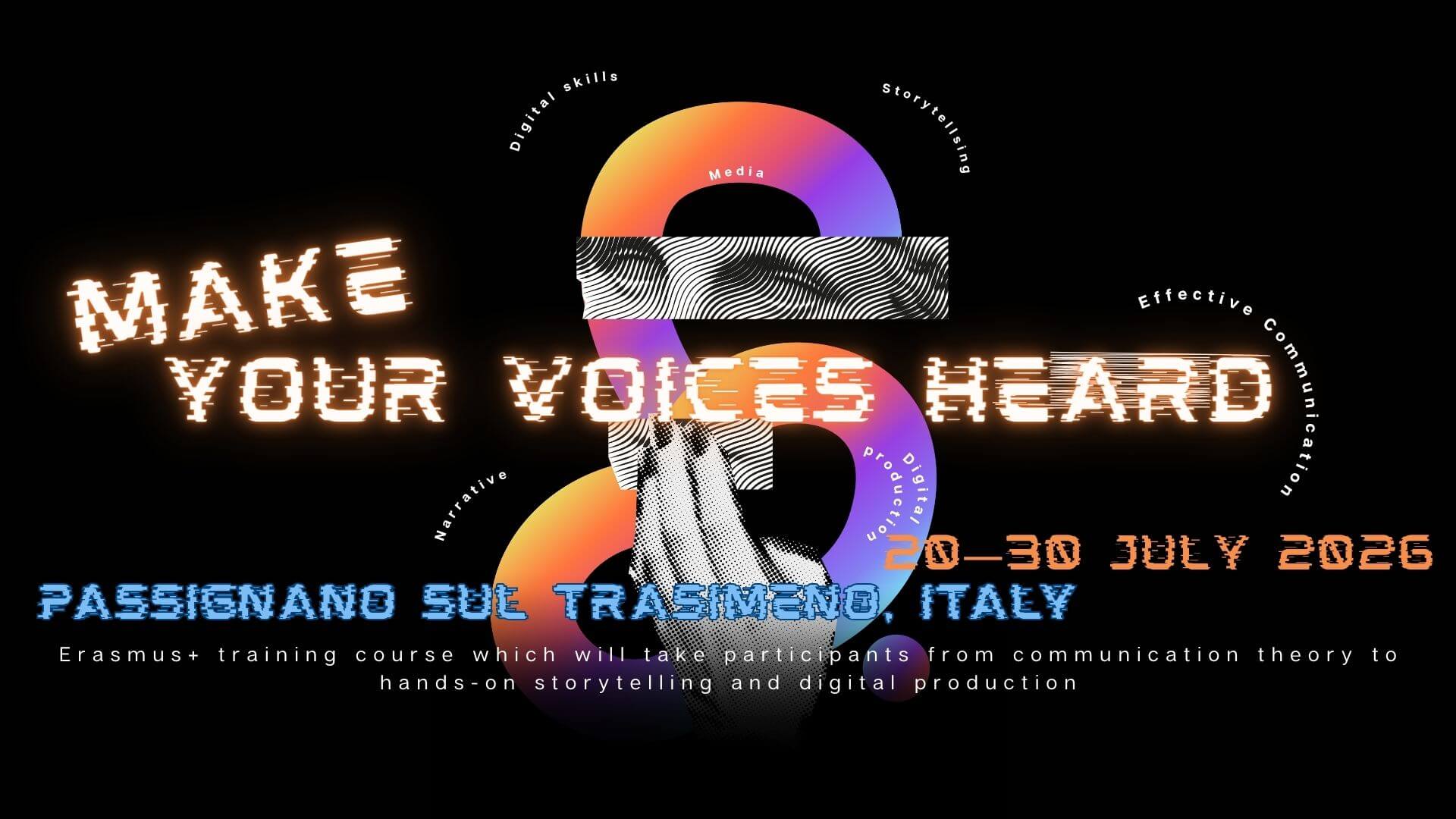
Termín konání: 20.—30. červenec 2026
Místo konání: Passignano sul Trasimeno, Itálie
Český tým: 2 účastníci – pracovníci s mládeží (ve věku 18+let)
Před tím, než se přihlásíte na jakýkoliv náš projekt, důkladně si přečtěte všechny informace v sekci Chci vyjet na projekt a seznamte se s Pravidly účasti na zahr. projektech.
Prosím důkladně si přečtete infopack. Pokud máte zájem se na tento projekt přihlásit, prosím odešlete vyplněnou přihlášku co nejdříve.
Pro to, abyste se na tento projekt přihlásili je nutné, abyste vlastnili nejen občanský průkaz (který musíte mít ze zákona), ale také platný cestovní pas (s platností min. ještě 150 dní od datumu začátku vámi vybraného projektu).
V rámci programu ERASMUS+ jsou následující finanční specifika: v rámci všech projektů je kompletně (ze 100%) zajištěno jídlo, ubytování, aktivity, a to vše je zcela pokryto z fondů EU programu ERASMUS+ a zařízeno organizátory. Účastníkům dále budou proplaceny cestovní náklady (reimbursement) z místa bydliště do místa konání projektu a to dle způsobu dopravy:
- €309 v případě letecké dopravy,
- €417 v případě pozemní dopravy (= pouze autobusy/vlaky).
Hostitelská organizace:Associazione Kora
Popis projektu:
Hosted by Associazione Kora, Make Your Voices Heard is a ten-day Erasmus+ Training Course that will bring together 24 participants from across Erasmus+ Programme Countries for an immersive experience in storytelling, video production, communication, and intercultural learning.
Throughout the course, participants will develop practical communication and digital media skills while creating real communication products. They will leave with hands-on experience, tangible outputs, and increased confidence in using storytelling and digital tools within their professional and community work.
What is this project about:
NGOs do vital work but many struggle to communicate it. They lack the digital skills, the confidence or the tools to tell their stories effectively to the outside world. Meanwhile, internal communication is often fragmented, informal, and inconsistent. The result: important work goes unseen, funding is harder to secure and communities are less connected than they could be.
But every community has a voice. This programme teaches people how to use it – clearly, creatively, and with intention. Make Your Voices Heard is a 10-day training programme that takes participants from communication theory to hands-on storytelling and digital production. It is built for people who work in or with NGOs – not communication professionals, but people who need to communicate as part of everything else they do. By the end, each participant will have created a real piece of communication: a video, a written piece, a social campaign or a web presence – and the knowledge to keep going.
Main topics:
This programme covers the full journey from communication theory to digital production. Across ten days, participants explore a carefully sequenced set of topics that build on one another – from understanding how communication works, to making real content, to sharing it with the world.
The programme covers the following topics:
- Introduction to communication: theories, models, and principles
- Internal communication in organisations
- External communication: methods, channels, and best practices
- Strategic communication and SWOT analysis
- Storytelling and narrative structure
- Creative writing for digital and organisational contexts
- Social media strategy and content creation
- Web design and digital presence
- Video production: from concept to screen
- Visual identity and branding
- Conscious use of artificial intelligence in communication
- Communication for social inclusion and advocacy
- Communication for environmental awareness and green action
- Knowledge transfer: sharing what you’ve learned with your organisation and community
Objectives:
The project aims to strengthen the communication capacity of community practitioners across participating countries, equipping them with the digital skills, creative competences and critical awareness needed to communicate their work effectively – with a particular focus on social inclusion, environmental advocacy and reaching those furthest from public and digital life.
It addresses an ever present gap: people working in NGOs are routinely expected to manage complex communication tasks yet rarely receive structured training to do so with confidence. This gap is most acute in organisations working with disadvantaged communities, where effective communication is a condition for visibility, advocacy and access to resources.
Participants will develop the skills to tell compelling stories about social and environmental issues, to design a type of communication that actively reaches excluded audiences and to mobilise community engagement more effectively.
Finally, through the open publication of all programme materials the project aims to extend its impact beyond the immediate aims – enabling participants to adapt and deliver the programme in their own contexts.
Who Should Participate?
We invite each partner organisation to send 2–3 participants. The programme is designed to have the greatest impact when partner teams bring complementary perspectives and expertise.
The course is designed for people who are active in organisations either as volunteers, youth workers, youth leaders, facilitators or project coordinators and who are involved in delivering non-formal learning.
We especially welcome participants from organisations that:
- communicate regularly with the public, media, funders or partner organisations and want to do so more effectively, or
- are in the process of developing or refreshing their communication strategy, digital presence or visual identity, or work with disadvantaged, marginalised or underrepresented communities whose stories deserve greater visibility, or
- are engaged in environmental or social advocacy and want to strengthen the impact of their messaging.
Participants should be motivated to work practically and creatively, collaborate in international teams, experiment with digital tools in real conditions, and bring concrete outcomes and new competences back to their home organisation and community.
We recommend that each team includes:
- At least one participant with a practical or creative background—someone who already uses communication tools in their work and can contribute confidently to the hands-on production activities.
- At least one participant with an organisational or coordination role—such as a project manager or programme coordinator—who can connect the training content to the wider communication and strategic goals of the organisation.