Erasmus+, Klíčová Akce 1: tréninkový kurz pro pracovníky s mládeží
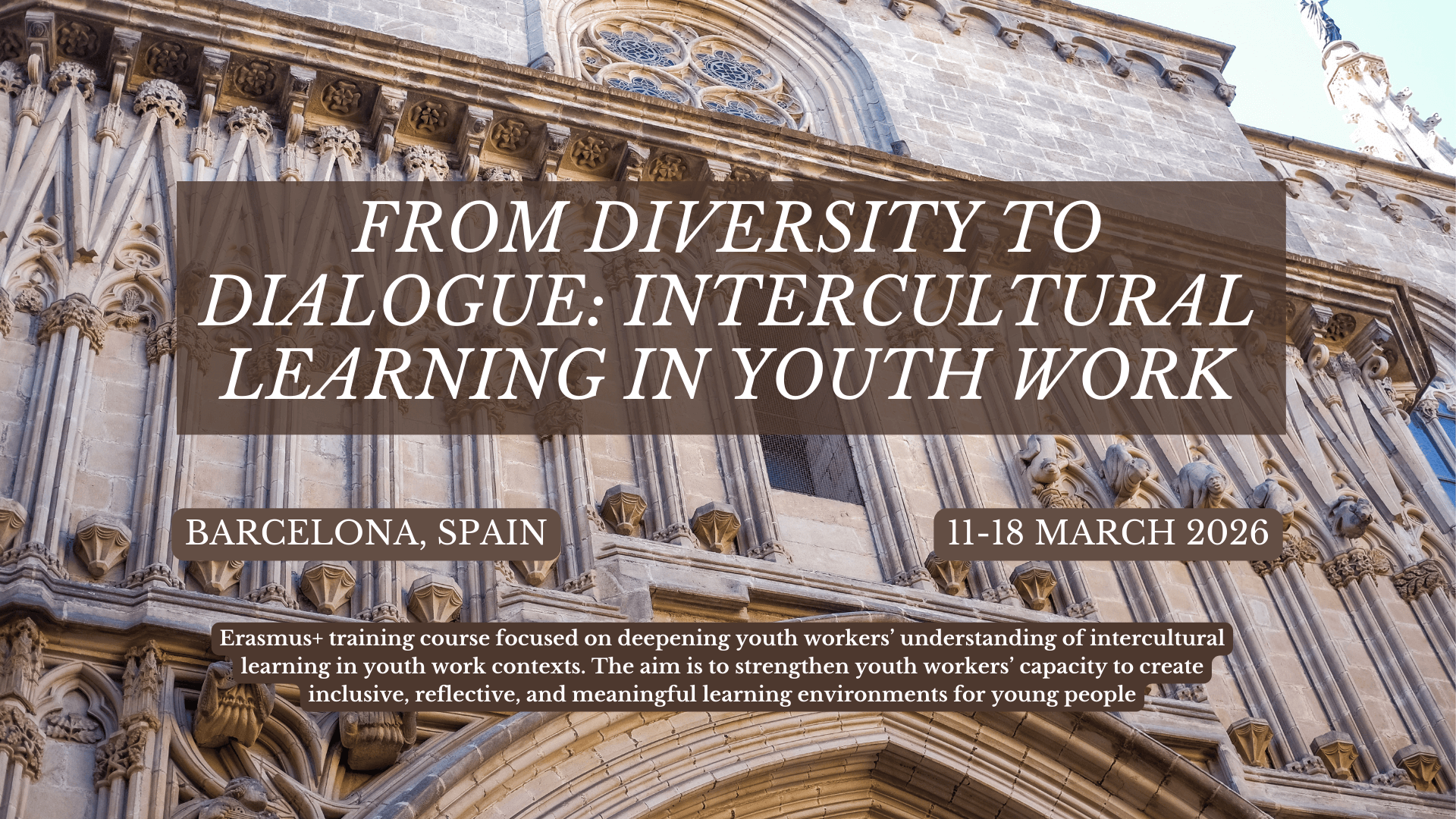
Termín konání: 11.—18. březen 2026
Místo konání: Barcelona, Španělsko
Český tým: 3 účastníci—pracovníci s mládeží (ve věku 18+)
Před tím, než se přihlásíte na jakýkoliv náš projekt, důkladně si přečtěte všechny informace v sekci Chci vyjet na projekt a seznamte se s Pravidly účasti na zahr. projektech.
Pokud máte zájem se na tento projekt přihlásit, prosím důkladně si přečtete info-pack a rozpis denních aktivit. Český tým je plně obsazen. Pokud máte zájem se na tento projekt přihlásit jako náhradníci, prosím odešlete vyplněnou přihlášku co nejdříve.
Pro to, abyste se na tento projekt přihlásili je nutné, abyste vlastnili nejen občanský průkaz (který musíte mít ze zákona), ale také platný cestovní pas (s platností min. ještě 150 dní od datumu začátku vámi vybraného projektu).
V rámci programu ERASMUS+ jsou následující finanční specifika: v rámci všech projektů je kompletně (ze 100%) zajištěno jídlo, ubytování, aktivity, a to vše je zcela pokryto z fondů EU programu ERASMUS+ a zařízeno organizátory. Účastníkům dále budou proplaceny cestovní náklady (reimbursement) z místa bydliště v ČR do místa konání projektu a zpět. Max. rozpočet pro proplacení cest. nákladů je určen dle způsobu dopravy a to následovně:
- €309 v případě využití letecké dopravy,
- €417 v případě využití pozemní „zelené“ dopravy (= pouze autobusy/vlaky).
Hostitelská organizace: Youth Power Germany
Popis projektu:
The course places strong emphasis on the role of youth workers as facilitators of intercultural learning and dialogue. Participants will examine how intercultural learning processes can be designed and facilitated in a responsible and inclusive way, with particular attention to safe(r) learning spaces, ethical facilitation, and constructive handling of tensions and conflict. By combining theoretical input with reflection on personal experiences, the training supports participants in critically analysing their own positions and practices in intercultural contexts.
Going beyond theory, the training course is highly participatory and practice-oriented. Participants will take part in interactive exercises, group work, and hands-on workshops that support the development of practical competences for designing and implementing intercultural learning activities. Special focus will be placed on developing local-level initiatives that promote dialogue, inclusion, and active participation within diverse communities. By the end of the course, participants will have strengthened their facilitation skills, developed concrete activity concepts, and gained tools and strategies to transfer intercultural learning into their everyday youth work practice.
The training course is developed in line with Youth Goal 3: Inclusive Societies and contributes to:
- Ensuring that all marginalised young people have equal access to formal and non-formal learning environments, addressing all the dimensions of inclusion.
- Strengthening the capacities of educators to work with marginalised young people.
- Ensuring that marginalised young people are participating in all decision-making processes and are key players, particularly in processes concerning their own rights, wellbeing and interests.
The training course is grounded in non-formal education principles and experiential learning approaches. The programme is designed to equip participants with the knowledge, skills, and practical tools needed to understand intercultural learning, address stereotypes, discrimination, and inequalities, and support inclusive intercultural educational practices in youth work contexts.
The initial phase of the training focuses on building a safe and inclusive learning environment, fostering trust among participants, and creating a strong sense of group cohesion. During these first days, participants will engage in activities that explore the foundations of intercultural learning, reflect on personal and societal perspectives, and examine how identity, power relations, and bias influence learning processes and participation. This phase also highlights the role of intercultural learning in youth work and its contribution to inclusive societies.
As the training progresses, participants will deepen their understanding of intercultural learning theories and models, strengthen their facilitation competences, and explore educational methods and tools that support meaningful intercultural dialogue and engagement among young people. Particular attention is given to creating safe(r) learning spaces, handling sensitive topics, and responding constructively to tensions and conflict in intercultural settings.
In the later stages of the programme, participants will focus on designing local-level youth work activities that promote intercultural learning within their communities. By applying experiential learning principles, they will develop inclusive and reflective activity concepts, address barriers to participation, and adapt approaches to diverse youth contexts. On the final day, participants will present their activity concepts, which can be implemented in their own youth work practice. The course concludes with a collective reflection, evaluation of learning outcomes, and recognition of participants’ achievements through the Youthpass ceremony.