Erasmus+, Klíčová Akce 1: tréninkový kurz
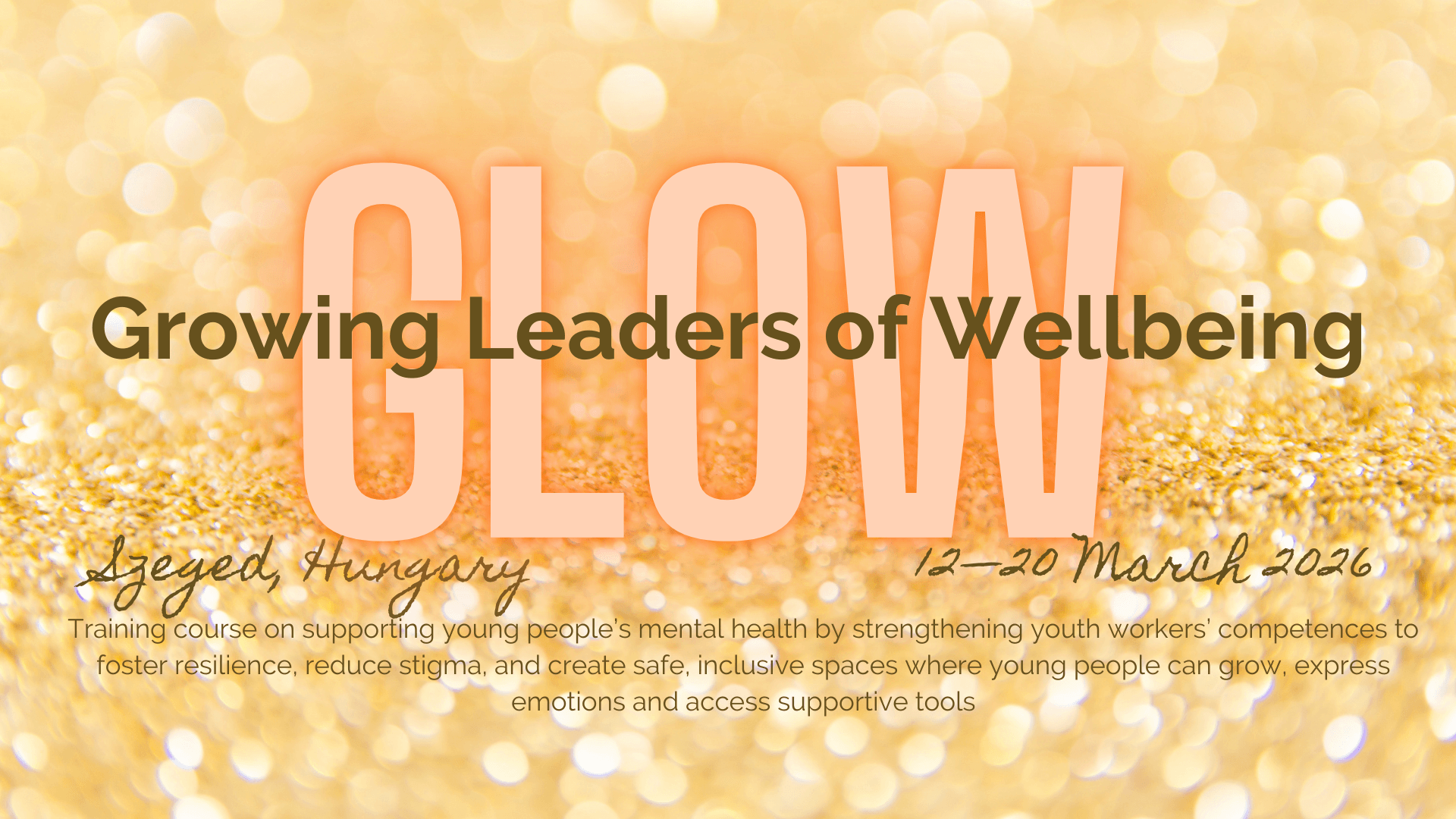
Termín konání: 12.—20. březen 2026
Místo konání: Szeged, Maďarsko
Český tým: 2 účastníci (ve věku 18+)
Před tím, než se přihlásíte na jakýkoliv náš projekt, důkladně si přečtěte všechny informace v sekci Chci vyjet na projekt a seznamte se s Pravidly účasti na zahr. projektech.
Pokud máte zájem se na tento projekt přihlásit, prosím důkladně si přečtete info-pack. Pokud máte zájem se na tento projekt přihlásit, prosím odešlete vyplněnou přihlášku co nejdříve.
Pro to, abyste se na tento projekt přihlásili je nutné, abyste vlastnili nejen občanský průkaz (který musíte mít ze zákona), ale také platný cestovní pas (s platností min. ještě 150 dní od datumu začátku vámi vybraného projektu).
V rámci programu ERASMUS+ jsou následující finanční specifika: v rámci všech projektů je kompletně (ze 100%) zajištěno jídlo, ubytování, aktivity, a to vše je zcela pokryto z fondů EU programu ERASMUS+ a zařízeno organizátory. Účastníkům dále budou proplaceny cestovní náklady (reimbursement) z místa bydliště v ČR do místa konání projektu a to max. do výše €285/účastník. Prosím berte na vědomí, že u tohoto projektu je pro český tým možná jen a pouze pozemní doprava (= pouze autobusy/vlaky).
Hostitelská organizace: YOPA
Popis projektu:
“GLOW – Growing Leaders of Wellbeing”
Training course on supporting young people’s mental health by strengthening youth workers’ competences to foster resilience, reduce stigma, and create safe, inclusive spaces where young people can grow, express emotions and access supportive tools.
Our training course focuses on strengthening youth workers’ competences to understand, address and promote mental health and wellbeing among young people through non-formal learning. Mental health is a growing concern across Europe, and youth workers increasingly face challenges related to stress, anxiety, stigma, and emotional difficulties among the young people they support. The course therefore introduces a set of interconnected themes that build knowledge, skills and attitudes required for quality youth work in this field.
Our first theme explores mental health literacy, offering participants an accessible introduction to key concepts such as emotional wellbeing, protective and risk factors, basic elements of Cognitive Behavioural
Therapy, and positive psychology. This provides a shared language and framework for recognising mental- health related needs in youth work.
Our second theme addresses taboo and stigma, examining how cultural attitudes, discrimination, and silence affect young people’s willingness to seek help. Through non-formal educational methods, participants analyse common stereotypes and learn how to create safer, more inclusive environments where open conversations are possible.
Our programme also focuses on emotional-support tools relevant to youth work, including introductory techniques for stress and anger management and Emotional Freedom Technique (EFT). These sessions help youth workers better understand emotional regulation and reflect on the boundaries, ethics, and safe application of such tools in their practice.
Another key theme is mental health advocacy and campaigning. Participants learn how to design simple, sustainable awareness campaigns that can be adapted for local communities. This practical component
strengthens youth workers’ ability to engage young people in positive, empowering initiatives.
Finally, our training includes a theme on European cooperation and Erasmus+ opportunities, supporting participants in transforming their learning into future projects. Through idea development and exchange of practices, they explore how transnational collaboration can enhance mental-health support in youth work and contribute to long-term impact.
The overall aim of the training is to strengthen youth workers’ competences to understand, address, and promote mental health and wellbeing among young people—especially those with fewer opportunities— through non-formal learning methods, stigma-reducing approaches, emotional support tools, and the capacity to design sustainable awareness campaigns and Erasmus+ projects in their local communities.
The objectives of the training course are:
- Improve Mental Health Literacy of Youth Workers: Participants will be able to identify, explain, and use at least 5 core mental health concepts (e.g., CBT basics, positive psychology tools, glossary of mental health terms) to support young people’s wellbeing in youth work settings.
- Build Competences to Recognise and Address Stigma & Taboo: Participants will gain practical tools to challenge stigma around mental health and will design at least one non-formal activity addressing taboo topics relevant to young people.
- Strengthen Youth Workers’ Emotional-Support Toolbox: Participants will learn and practice at least three techniques (EFT, stress management, anger management) and be able to identify safe contexts for using them with young people.
- Develop Capacity to Design Sustainable Mental Health Campaigns: Participants will collaboratively create at least one sustainable mental health awareness campaign that can be implemented locally after the training.
- Foster Transnational Cooperation and Good Practice Exchange: Participants will share at least three practices from their local contexts and contribute to a common pool of methods or ideas for ongoing cooperation after the course.
- Increase Competence in Using Erasmus+ for Mental Health–related Youth Work: Participants will identify at least two opportunities within Erasmus+ (e.g., Youth Exchanges, Training Courses) and develop one concrete project idea supporting young people’s mental wellbeing.
The methodology of the training course:
Our methodology is inclusive, learner-centred and practice-oriented, ensuring that participants not only gain new knowledge but also develop the confidence and competences needed to implement mental-health-related approaches in their local communities.
Our training course is based on non-formal education (NFE) principles and experiential learning, ensuring that participants learn through active involvement, reflection and direct application of concepts. The methodology is designed to create a safe, inclusive and engaging learning environment where youth workers with diverse backgrounds can develop new competences related to mental health, wellbeing and inclusive youth work. A combination of interactive workshops, group work, creative sessions and peer-to-peer learning allows participants to explore mental health from multiple perspectives. Methods such as icebreakers, team- building activities and guided reflection groups help create trust within the group and support participants in forming a strong learning community.
The course follows Kolb’s experiential learning cycle, encouraging participants to experience, reflect, conceptualise and plan how to apply new knowledge in their own youth work. The methodology also integrates expert-based inputs in an accessible, practice-oriented way. Introductory sessions on Cognitive Behavioural Therapy, positive psychology and emotional-support tools (e.g., stress management, EFT) are delivered through demonstrations, pair exercises and facilitated discussions. This ensures that youth workers gain a basic understanding of the concepts while critically examining how and when such tools can be safely used in their work with young people.
Creative, participatory methods such as Open Space Technology, campaign-design workshops and problem-solving tasks enable participants to co-create ideas, share good practices and develop concrete outputs, including a draft mental health awareness campaign and Erasmus+ project ideas. Daily reflection groups and the Youthpass process support participants in recognising their learning outcomes and linking them to the ETS Competence Model for Youth Workers. Throughout the course, an experienced trainers’ team ensure an inclusive and supportive atmosphere, applying mental-health-sensitive facilitation practices such as clear communication and safeguarding measures.