Erasmus+, Klíčová Akce 1: tréninkový kurz
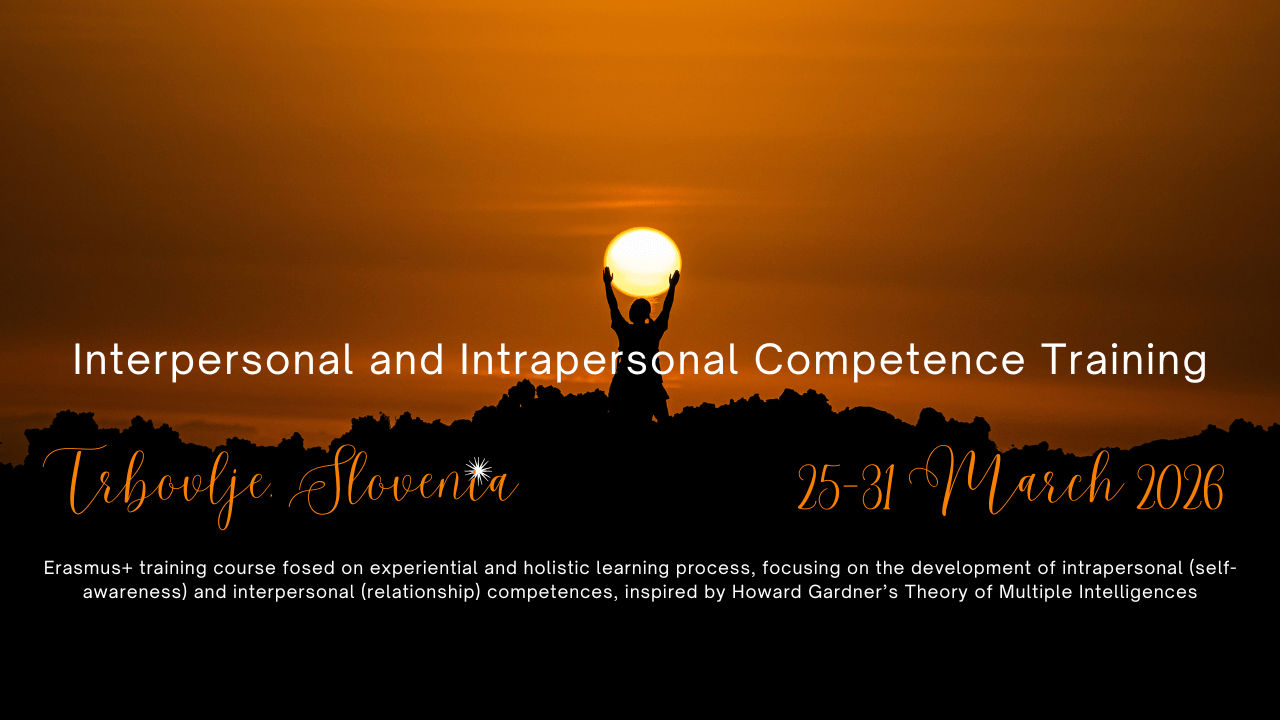
Termín konání: 25.—31. březen 2026
Místo konání: Trbovlje, Slovinsko
Český tým: 3 účastníci – pracovníci s mládeží (ve věku 18+ let)
Před tím, než se přihlásíte na jakýkoliv náš projekt, důkladně si přečtěte všechny informace v sekci Chci vyjet na projekt a seznamte se s Pravidly účasti na zahr. projektech.
Prosím důkladně si přečtete info-pack. Pokud máte zájem se na tento projekt přihlásit jako náhradníci, prosím odešlete vyplněnou přihlášku co nejdříve.
Pro to, abyste se na tento projekt přihlásili je nutné, abyste vlastnili nejen občanský průkaz (který musíte mít ze zákona), ale také platný cestovní pas (s platností min. ještě 150 dní od datumu začátku vámi vybraného projektu).
V rámci programu ERASMUS+ jsou následující finanční specifika: v rámci všech projektů je kompletně (ze 100%) zajištěno jídlo, ubytování, aktivity, a to vše je zcela pokryto z fondů EU programu ERASMUS+ a zařízeno organizátory. Účastníkům dále budou proplaceny cestovní náklady (reimbursement) z místa bydliště do místa konání projektu a to dle způsobu dopravy:
- €211 v případě letecké dopravy,
- €285 v případě pozemní dopravy (= pouze autobusy/vlaky).
Hostitelská organizace: ASPIRA Institute
Popis projektu:
This training is designed as an experiential and holistic learning process, focusing on the development of intrapersonal (self-awareness) and interpersonal (relationship) competences, inspired by Howard Gardner’s Theory of Multiple Intelligences. The programme invites participants to explore themselves and others through creative, reflective and embodied methods. It supports participants in recognising their existing strengths while gently developing areas with untapped potential.
The training emphasises:
- holistic development (body, mind and emotions),
- cooperation rather than competition,
- personal growth, resilience and self-awareness,
- meaningful connections with others.
This training is implemented within the framework of the Erasmus+ Youth Accreditation. The accreditation focuses on three key objectives:
Individual development:
Supporting young people and youth workers through a holistic approach based on the Theory of Multiple Intelligences. The training strengthens existing competences, encourages the development of untapped potential and contributes to greater personal resilience, self-awareness and emotional wellbeing.
Societal development:
Providing practical tools applicable in both formal and non-formal education. The approach fosters cooperation between sectors, promotes inclusion, and encourages collaboration rather than competition.
Organisational development:
Creating and continuously developing a safe, innovative learning environment that supports individuals in discovering their talents, interests and passions, enabling sustainable personal and professional growth.
COMPETENCES ACQUIRED BY PARTICIPANTS
By participating in this training, participants will develop:
- self-awareness and emotional intelligence
- interpersonal communication and active listening skills
- ability to recognise personal strengths and potential skills for
- setting healthy personal boundaries
- increased resilience and stress awareness
- competence in using creative and experiential methods
- understanding of multiple intelligences and their application in youth work
This training is intended for professionals and practitioners working with young people, who are actively involved in non-formal learning processes.
Participants should have: at least 3 years of experience in direct work with young people.
The training is open to:
- youth workers and youth leaders,
- trainers and facilitators,
- teachers and educators,
- social workers and other professionals who work with young people and use non-formal education methods in their practice (or wish to further strengthen this approach)
Participants are expected to:
- be motivated to actively participate in the full training programme,
- be open to self-reflection, experiential learning and group processes,
- show interest in developing interpersonal and intrapersonal competences,
- be willing to share experiences and learn from others.
Dissemination & follow-up:
Participants should be committed to:
- sharing and disseminating the acquired knowledge, methods and approaches within their sending organisations and local
contexts, applying the learning outcomes in their ongoing work with young people, - contributing to the broader impact of the project beyond the training itself.