Erasmus+, Klíčová Akce 1: seminář na navazování kontaktů mezi mládežnickými organizacemi a pracovníky s mládeží
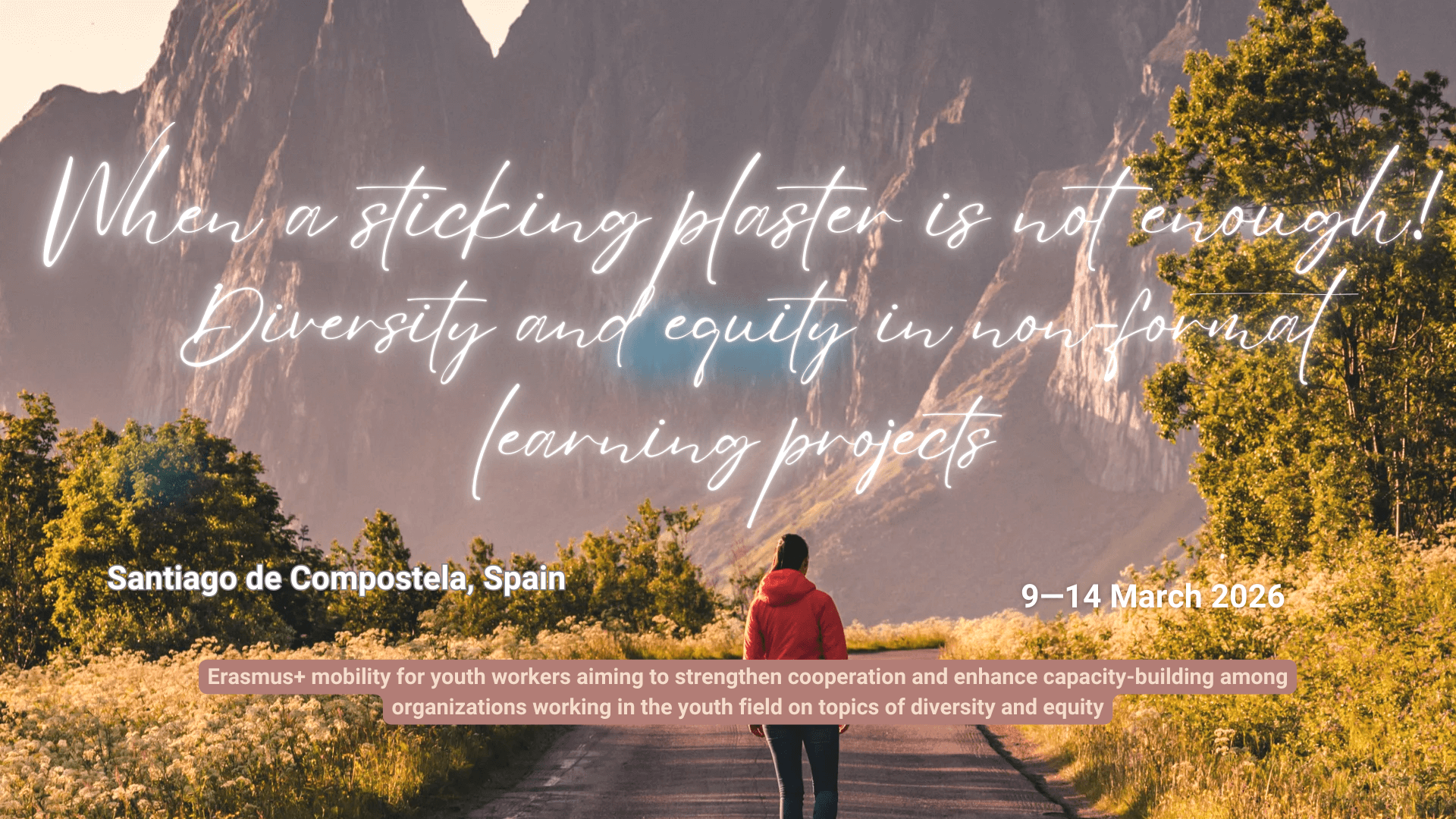
Termín konání: 9.—14. březen 2026
Místo konání: Santiago de Compostela, Španělsko
Český tým: 2 účastníci (ve věku 18+). Tento seminář je jen a pouze pro ty, kteří jsou dlouhodobě aktivně zapojeni do mládežnických organizací, pořádající Erasmus+ projekty, či s plným úmyslem o Erasmus+ grant požádat
Před tím, než se přihlásíte na jakýkoliv náš projekt, důkladně si přečtěte všechny informace v sekci Chci vyjet na projekt a seznamte se s Pravidly účasti na zahr. projektech.
Pokud máte zájem se na tento projekt přihlásit, prosím důkladně si přečtete info-pack. Pokud máte zájem se na tento projekt přihlásit jako náhradníci, prosím odešlete vyplněnou přihlášku co nejdříve.
Pro to, abyste se na tento projekt přihlásili je nutné, abyste vlastnili nejen občanský průkaz (který musíte mít ze zákona), ale také platný cestovní pas (s platností min. ještě 150 dní od datumu začátku vámi vybraného projektu).
V rámci programu ERASMUS+ jsou následující finanční specifika: v rámci všech projektů je kompletně (ze 100%) zajištěno jídlo, ubytování, aktivity, a to vše je zcela pokryto z fondů EU programu ERASMUS+ a zařízeno organizátory. Účastníkům dále budou proplaceny cestovní náklady (reimbursement) z místa bydliště v ČR do místa konání projektu a zpět. Max. rozpočet pro proplacení cest. nákladů je €395/účastník.
Hostitelská organizace: Asociación Fogart
Popis projektu:
Objectives:
This seminar aims to bring together entities who work in the youth field, implementing learning projects through non-formal education, in different countries, within a space that allows to get to know each other and share our way of working, building a solid and trustworthy network and acquire resources on how to make the projects we carry out more accessible and equitable.
In many non-formal education events that we carry out (courses, seminars, youth exchanges, etc.), we face challenges in dealing with diversity ( lack of facilities, difficulty finding time, lack of skills or knowledge, assumptions about the capabilities of young people with disabilities, attitudinal barriers (also as a result of stigmatisation and discrimination), difficulties in reaching more diverse groups, additional costs that we cannot cover…) ,and often, what we do is put a sticking plaster on them, instead of creating an accessible design, where everyone is welcomed with equal opportunities, ensuring that each participant feels truly welcome to participate and contribute with their input and feels equally valued.
We are aware that addressing diversity is a highly individualised process, as many minorities and specificities need to be taken into account and partially depends on the context of the work being done, but even small and deliberate changes in our approaches and actions can make activities more accessible to new target groups of young people and not just one type of user, and that is what this seminar aims to do.
During this seminar, participants will have the opportunity to discover new tools and develop their training and logistical skills to manage and work with diversity in all its senses, increase their box of educational tools, and develop their competences to make more accessible projects.
In addition, we’ll share the opportunities of inclusión and diversity offered by the Erasmus+ in the field of Youth and European Solidarity Corps (ESC) programs, increasing the number and quality of European projects.
Aim:
The aim of the seminar is to improve the skills of facilitators, trainers, logisticians and project coordinators in terms of equity and diversity in learning environments, to increase knowledge, train specific skills and develop positive attitudes with “Design for all” in their activities as multipliers in the youth field.
Some concrete objectives of the seminar are:
• Detect and make visible the structural inequalities and the challenges that partners entities face when organizing an accessible learning event;
• Gain knowledge and become familiar with different tools, on how to develop non-formal learning activities accessible to all, learn from methods used in learning projects but also in other sectors, and see how they can be applied and adapted to the needs of our events;
• Encourage the participation of young people with fewer opportunities in no formal education projects, reducing obstacles of participation;
• Promotes Erasmus+ Youth and the European Solidarity Corps as tools for inclusion and capacity building;
• Open ways to work on solutions through solid and efficient partnerships networking and creating future cooperation projects between the participants and organizations;
• Raises awareness the needs and potential of the target groups;
• Promote diversity as a valuable source of learning and dialogue in Europe and beyond about equity and accessibility.
Methodology and contents:
The seminar will be divided mainly into 3 parts with the following contents through non formal learning methodology:
START POINT. In the first part, the focus will be on getting to know the other participants and their organizations. There will also be time to create common ground and know the possibilities that the Erasmus+ program offers us.
ANALYSE AND GET INSPIRED The second part will be all about entities: We will analyze the possible specificities, challenges, questions on the subject and opportunities to build and maintain
networks in this broad and multifaceted geographical context and share good practices.
BUILDING PROPOSALS On the last part will be time for concrete actions, in this third part of the seminar, we will project future scenarios through a proposal for action and collaborations.
All of this with a prism adapted to new challenges and opportunities for the young people in our entities, addressing key aspects so that learning activities are more accessible and offering solutions instead of just pointing out the challenges (providing resources, having experts in very specific areas…)