Erasmus+, Klíčová Akce 1: seminář na budování kontaktů mezi organizacemi (partnership building activity)
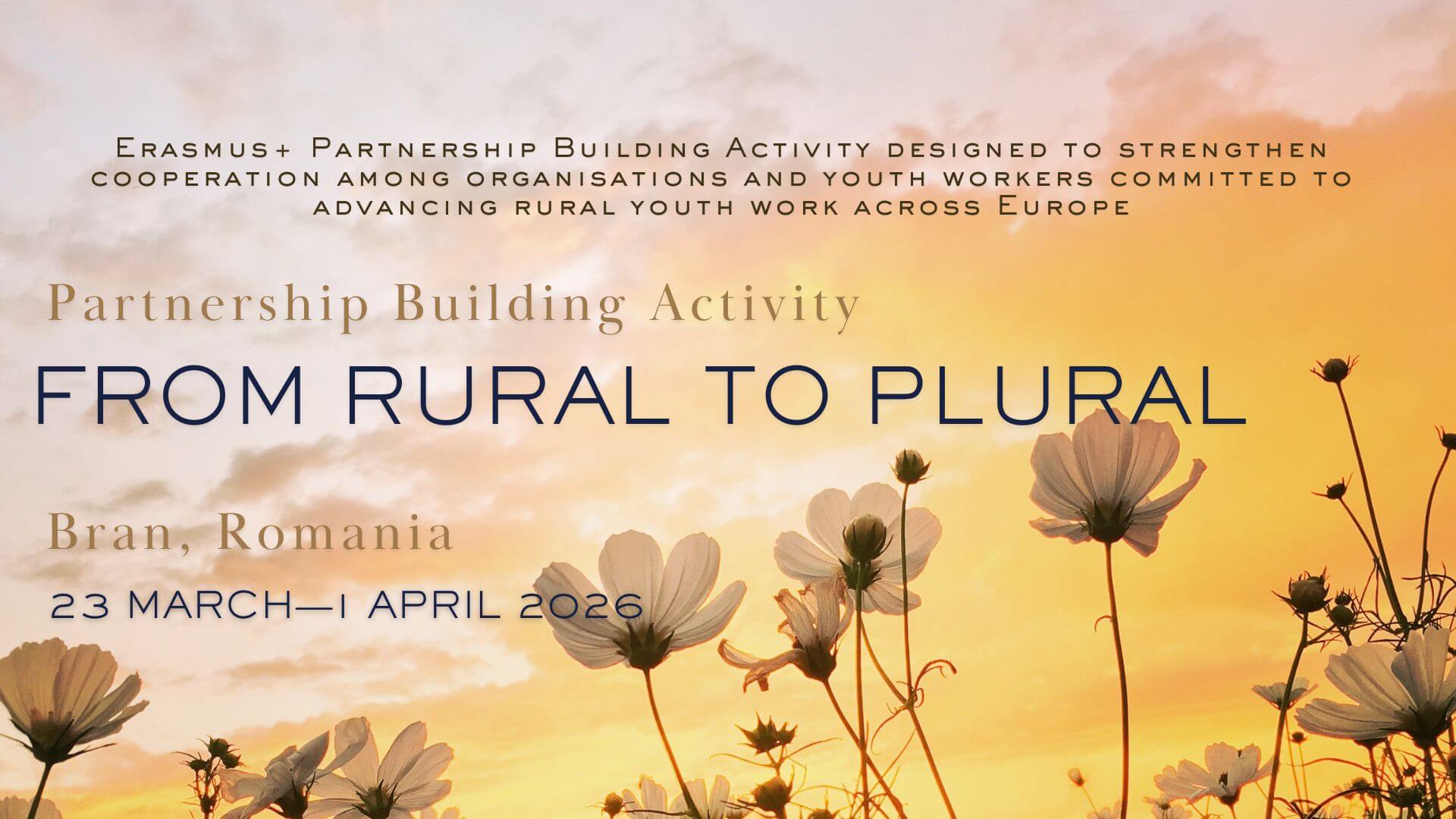
Termín konání: 23. březen—1. duben 2026
Místo konání: Bran, Transylvánie, Rumunsko
Český tým: 1-2 účastníci – pracovníci s mládeží (ve věku 18+)
Před tím, než se přihlásíte na jakýkoliv náš projekt, důkladně si přečtěte všechny informace v sekci Chci vyjet na projekt a seznamte se s Pravidly účasti na zahr. projektech.
Pokud máte zájem se na tento projekt přihlásit, prosím důkladně si přečtete info-pack. Pokud máte zájem se na tento projekt přihlásit, prosím odešlete vyplněnou přihlášku co nejdříve.
Přečti si, jak probíhala předchozí edice tohoto projektu zde.
Pro to, abyste se na tento projekt přihlásili je nutné, abyste vlastnili nejen občanský průkaz (který musíte mít ze zákona), ale také platný cestovní pas (s platností min. ještě 150 dní od datumu začátku vámi vybraného projektu).
V rámci programu ERASMUS+ jsou následující finanční specifika: v rámci všech projektů je kompletně (ze 100%) zajištěno jídlo, ubytování, aktivity, a to vše je zcela pokryto z fondů EU programu ERASMUS+ a zařízeno organizátory. Účastníkům dále budou proplaceny reálné cestovní náklady (reimbursement) z místa bydliště v ČR do místa konání projektu dle způsobu dopravy:
- €309 v případě využití letecké dopravy,
- €417 v případě využití ‚zelené‘ pozemní dopravy (= autobusy, vlaky).
Hostitelská organizace: Dezvoltare Activa
Popis projektu:
This mobility is designed for youth workers and organisational staff/youth workers who are actively involved in rural youth work and are interested in:
- strengthening rural youth participation structures;
- exploring governance and sustainability models in rural contexts;
- exchanging practices and systemic approaches across Europe;
- building concrete European cooperation clusters;
- contributing to a shared European positioning of rural youth work.
The activity will combine learning, reflection, systems thinking, governance dialogue, and structured partnership development. It is not a project-writing seminar, but a space to build meaningful, long-term cooperation around rural youth work ecosystems.
Please read the info-pack for more details.
Who we are looking for:
We invite youth workers from organisations that:
- actively work with rural or semi-rural youth (minimum experience in rural youth work is required);
- are interested in governance, participation structures, and sustainability models;
- are willing to engage in follow-up cooperation beyond the mobility;
- can delegate participants with a clear organisational mandate.
Each national group can be represented by 1 or 2 participants (18+): youth workers, coordinators, organisational leaders, or staff involved in rural youth development.
All accommodation, meals, and programme costs are covered by Erasmus+. Travel costs will be reimbursed according to Erasmus+ distance bands and rules.
“From Rural to Plural 3.0 – Building European Partnerships for Rural Youth Work” is an international Erasmus+ Partnership Building Activity designed to strengthen cooperation among organisations and youth workers committed to advancing rural youth work across Europe. The activity will bring together up to 28 youth workers, organisational staff, and rural youth practitioners who are actively involved in youth work in rural or semi-rural contexts and are interested in building sustainable European cooperation, strengthening governance models, and positioning rural youth work as a priority within local, national, and European agendas.
Throughout the 8-day activity, participants will explore rural youth work from multiple interconnected perspectives, while collaboratively building a shared European ecosystem for cooperation. The programme will provide space to:
• analyse structural challenges affecting young people in rural areas across Europe,
• exchange concrete practices and governance models in rural youth work,
• explore sustainability mechanisms and power dynamics within rural communities,
• strengthen communication and advocacy skills for positioning rural youth work,
• develop cooperation pathways and thematic working clusters,
• articulate a shared European vision through the “European Rural Youth Work Declaration”.
The European Youth Village programme will be explored as one structured case study within the broader rural youth work ecosystem, offering participants the opportunity to critically reflect on participation models, governance mechanisms, and adaptation potential without prescriptive replication.
WHAT IS THE CONTEXT & WHY WE DECIDED TO DO THIS:
Across Europe, rural areas are home to millions of young people whose realities remain underrepresented in public discourse, policy priorities, and youth work strategies. While rural communities are often portrayed as peaceful, cohesive, and rooted in tradition, young people growing up in these contexts frequently face structural challenges that limit their opportunities for participation, self-expression, and influence.
Geographical isolation, limited access to educational and cultural infrastructure, reduced public transport, fewer employment opportunities, and restricted youth spaces continue to shape the everyday experiences of rural youth. In many communities, young people are rarely involved in decision-making processes and often lack safe, meaningful spaces to express their ideas, concerns, and aspirations. This can contribute to disengagement, outward migration, and a weakened sense of belonging.
At the same time, youth workers and organisations operating in rural contexts face their own structural constraints. Youth work in rural areas often relies on small teams, limited funding, and informal structures. Cooperation between municipalities and youth organisations is uneven across Europe, and sustainable governance models for rural youth participation are still developing in many countries. As a result, rural youth work frequently depends on isolated initiatives rather than systemic approaches.
Despite these challenges, rural areas also hold strong potential. Close-knit communities, intergenerational connections, and local identity can become powerful foundations for participation and innovation—if young people are supported through structured, sustainable, and inclusive youth work frameworks.
Over the past years, various initiatives across Europe have attempted to address these realities through participation models, youth councils, networks, local programmes, and community-based interventions. Among them, the European Youth Village programme emerged as one structured response, demonstrating how youth-led initiatives, municipal partnerships, mentorship systems, and visibility mechanisms can strengthen rural youth participation.
However, no single model can respond to the diversity of rural contexts across Europe. What is needed is not replication, but cooperation. We believe that strengthening rural youth work requires moving beyond isolated projects and towards European ecosystem-building. It requires spaces where youth workers, organisational staff, and practitioners can critically analyse governance models, exchange practices, address sustainability challenges, and build long-term cooperation pathways.
“From Rural to Plural 3.0 – Building European Partnerships for Rural Youth Work” was created in response to this need. The activity recognises that rural youth work is not only about activities, but about structures, legitimacy, sustainability, and shared responsibility at the European level. By bringing together practitioners from different countries, this Partnership Building Activity aims to create a collaborative space where rural youth work can be positioned as a strategic priority, supported through cooperation, and strengthened through shared learning and collective action.