Erasmus+, Klíčová Akce 1: tréninkový kurz
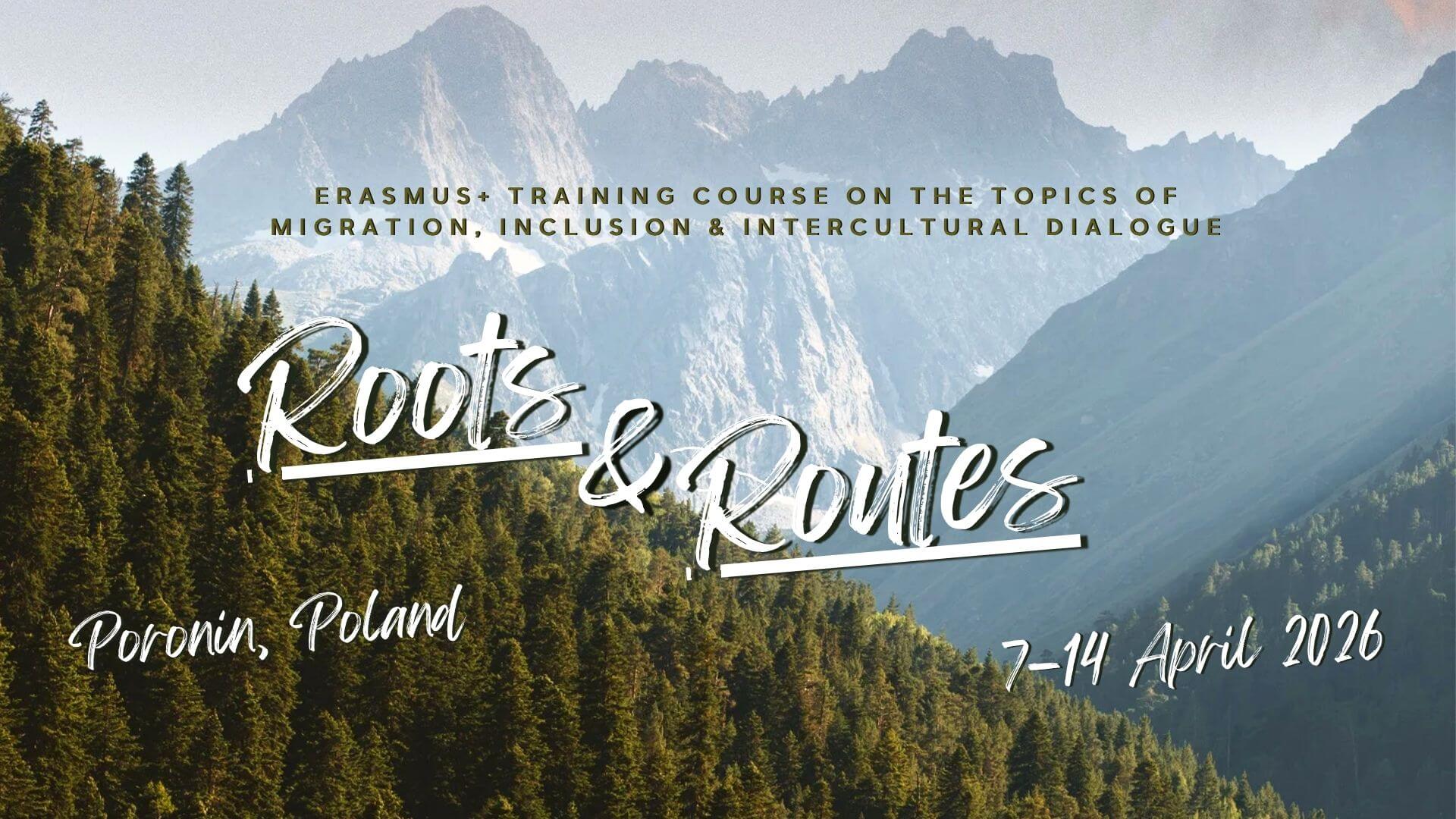
Termín konání: 7.—14. duben 2026
Místo konání: Poronin, Polsko
Český tým: 7 účastníků (ve věku 18+)
Před tím, než se přihlásíte na jakýkoliv náš projekt, důkladně si přečtěte všechny informace v sekci Chci vyjet na projekt a seznamte se s Pravidly účasti na zahr. projektech.
Prosím důkladně si přečtete info-pack. Pokud máte zájem se na tento projekt přihlásit, prosím odešlete vyplněnou přihlášku co nejdříve.
Pro to, abyste se na tento projekt přihlásili je nutné, abyste vlastnili nejen občanský průkaz (který musíte mít ze zákona), ale také platný cestovní pas (s platností min. ještě 150 dní od datumu začátku vámi vybraného projektu).
V rámci programu ERASMUS+ jsou následující finanční specifika: v rámci všech projektů je kompletně (ze 100%) zajištěno jídlo, ubytování, aktivity, a to vše je zcela pokryto z fondů EU programu ERASMUS+ a zařízeno organizátory. Účastníkům dále budou proplaceny cestovní náklady (reimbursement) z místa bydliště do místa konání projektu a to max. do výše €285/účastník. Pro český tým je možná jen a pouze pozemní doprava (= autobusy, vlaky).
Hostitelská organizace: Stowarzyszenie Inicjatyw Kulturalno-Mlodziezowich ART
Popis projektu:
Migration can be a transformative experience, opening up new opportunities, but at the same time generating serious risks in terms of education, employment and social cohesion for young people. According to Eurostat, over 30% of all migrants to the EU are aged 15-29, i.e. teenagers and young adults. As the JRC report ‘Youth and Migration’ emphasises: ‘Migration offers potentially enormous opportunities for young people (…) but it can also be a disruptive experience, particularly in terms of identity, educational outcomes and income.’ Furthermore, Council of Europe research on media coverage shows that narratives about migrants are often depersonalising and stigmatising: only 16% of articles mentioned the name of the protagonist, and only 7% mentioned their profession, which makes young people with migration experience lose their sense of agency and subjectivity even more. As practitioners in the youth work sector, we want to address the issue of identity and roots by training youth workers to equip them with the skills that will facilitate their daily work with young people. Difficulties in putting down roots and the lack of a clear path affect both migrant youth and youth workers, and we want this training to be a bridge to a better tomorrow.
The way in which the media portray refugees and migrants has a significant impact on how societies perceive and treat new arrivals. Dehumanising narratives can lead to increased prejudice and discrimination, and the lack of migrant voices in media coverage leads to their marginalisation in public debate and perpetuates the image of ‘others’ rather than a community of equal citizens, according to the 2017 UNESCO & Council of Europe report, Media coverage of the refugee crisis in Europe. Such statements were also made by our youth worker friends, with whom we conducted a ‘research trial’ to see if such a project was needed… and it is!
Together with our partners, we have identified three particular challenges in our work with young people: a lack of rootedness, multiculturalism and frequent migration, and the need to find one’s own path. Youth workers, in turn, report a need for substantive training in this area. We want to respond to this need.
That is why our Roots&Routes project aims to strengthen the key competences of youth workers in dealing with these challenges. Our objectives are closely linked to youth practice and policy. We want to ‘water the roots’ by equipping youth workers with methods that support young people in discovering and appreciating their own identity, family/regional history and cultural heritage. We will support intercultural dialogue by preparing staff to work in diverse environments and counteract stereotypes through non-formal education tools, and we will provide support methods and develop scenarios to support young people in planning their educational and professional development paths.
Our training responds to the real needs identified (described in the application) in working with young people and is in line with EU guidelines as it contributes to social inclusion, competence development and strengthening the potential of youth workers and their local communities. Our project is of high quality, so it will contribute to building the capacity of participating organisations and to developing the quality of youth work in Europe.
Activities
We intend to train 28 youth workers aged 18+ who are active in youth organisations, NGOs, educational institutions and local initiatives. There will be an equal number of participants from each partner, including people with fewer opportunities, to make our project more inclusive and accessible. We have identified specific needs and know how to remove the barriers faced by people with fewer opportunities and all participants when it comes to working with excluded young people. We have described their specific and precise needs in detail, together with scientific research and statistics, in the application. Returning to the profile of participants, these will of course be people working with migrant and refugee youth, people from small towns, suburbs and rural areas, youth workers with personal migration experience, trainers and facilitators looking for new working methods.
We are planning various modules, which are described in detail in the schedule, but these modules will include workshops on Roots and Identity – working with the memory of place, elements of Korczak’s pedagogy (‘there are no “other” children, there are people’), Migration and Diversity – we will analyse media narratives based on, among other things, Council of Europe reports, and we also plan to include a module on Youth Development Pathways and Non-Formal Education Tools. We will also have separate classes on Creating a Roots&Routes Toolkit and individual sessions on creating an action plan for after returning home.
The location of our training has a symbolic dimension, as it would take place in a region with strong highlander traditions, which allow us to learn how ‘roots’ and cultural heritage can be a starting point for dialogue with new diversity. We also plan to set off on a highlander trail. After the mobility, we expect each of the partners and participants to engage in follow-up/multiplier events.
Impact
Our main result will be an increase in intercultural and anti-discrimination competences. We assume that at least 90% of participants will assess an increase in their skills in working with migrant and multicultural youth (through Youthpass, self-evaluation). We want to establish new methods in practice – each participant will learn at least 5 non-formal education tools (forum theatre, digital storytelling, embodied learning, Korczak pedagogy, Freire’s approach) and implement them in their professional work within 3 months. In addition, agency and the role of multipliers are very important to us, which is why our participants will be prepared for the role of highly competent youth workers. As the Erasmus+ Inclusion and Diversity Strategy emphasises: „Multipliers are key to reaching young people with fewer opportunities, as they can act as role models and transmit results in a relatable way. That is why our project will also cover youth workers with fewer opportunities to ensure equal access to learning. Therefore, our project includes appropriate evaluation activities to assess whether the objectives have been achieved, thus ensuring continuous quality improvement and monitoring of results.
Our partners will implement the methods they have learned into their regular work, which will translate into institutional capacity building. We will present the digital Roots&Routes toolkit with training materials and make it available on our partners‘ websites and EU websites, such as SALTO Toolbox and Erasmus+ Results Platform. As emphasised by the Erasmus Youth Quality Standards: ‘Projects should contribute to the capacity building of participating organisations and to the quality development of youth work in Europe.’ We are able to guarantee this. In addition, in Zakopane and Podhale, participants will encounter highlander culture and, at the same time, work through the challenges of multiculturalism. As the EU Youth Dialogue Review points out, local communities and stakeholders play a key role in ensuring that the results of youth projects are consolidated and have a lasting impact. Our Roots&Routes project is crucial for the future development of the EU and is potentially one of the best support for youth workers dealing with migration and identity issues thanks to its various psychological and pedagogical approaches.
Many youth workers today encounter growing diversity among young people: migrants, refugees, people from ethnic, religious or linguistic minorities. This often leads to tensions and stereotyping, which is why our training in intercultural dialogue methods (forum theatre, digital storytelling, ‘roots and paths’ in group work), we will respond to the need to develop intercultural competences and work in diverse environments, which will result in the ability to create a safe space for difficult conversations about migration, identity and roots. Thanks to follow-up activities, participants will practise their skills in real life.
Unfortunately, as youth workers, we are increasingly working with young people who feel ‘suspended’ between different cultures, uncertain of their own identity, sometimes cut off from their family or local heritage. That is why, during the workshop, we will develop creative methods that help young people name their story and share it in a safe space. We care about our youth workers and would like to give them the best so that their work is easier and more satisfying.