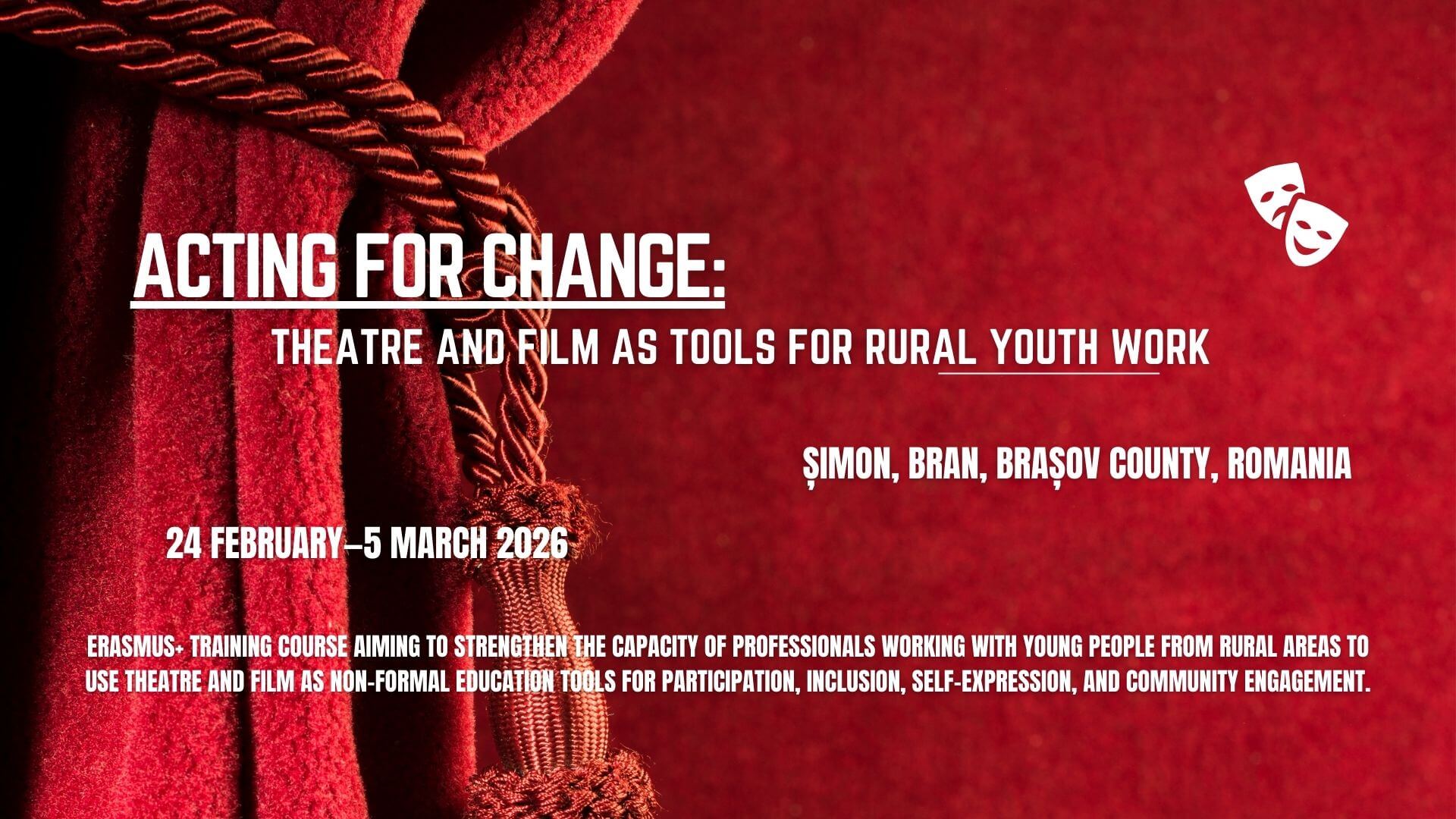
Acting for Change: Theatre and Film as Tools for Rural Youth Work — Rumunsko

single-image

Erasmus+, Klíčová Akce 1: tréninkový kurz

Termín konání: 24. únor—5. březen 2026

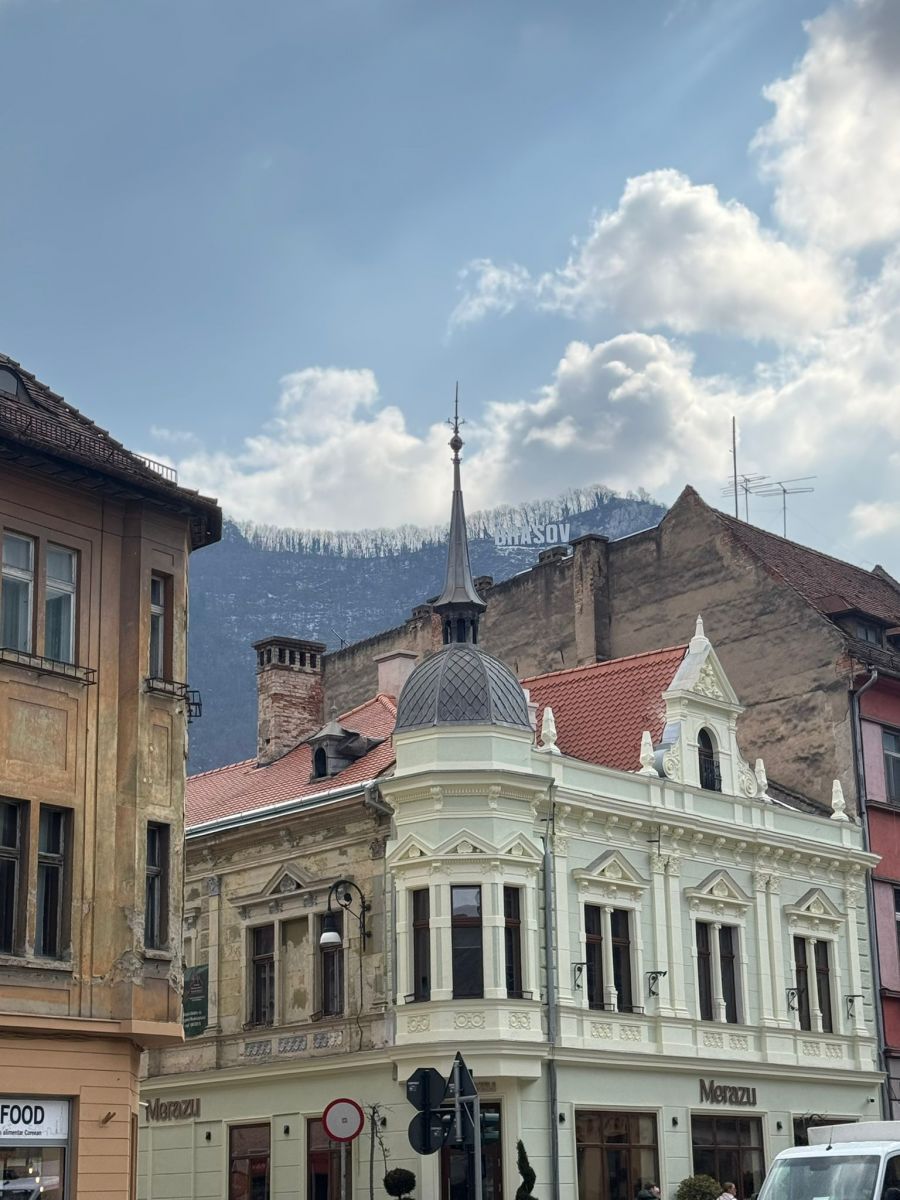
Místo konání: Șimon, Bran, region Brașov, Rumunsko

Český tým:účastníci – pracovníci s mládeží (ve věku 18+)

Před tím, než se přihlásíte na jakýkoliv náš projekt, důkladně si přečtěte všechny informace v sekci Chci vyjet na projekt a seznamte se s Pravidly účasti na zahr. projektech.

Pokud máte zájem se na tento projekt přihlásit, prosím důkladně si přečtete info-pack. Pokud máte zájem se na tento projekt přihlásit, prosím odešlete vyplněnou přihlášku co nejdříve.

Pro to, abyste se na tento projekt přihlásili je nutné, abyste vlastnili nejen občanský průkaz (který musíte mít ze zákona), ale také platný cestovní pas (s platností min. ještě 150 dní od datumu začátku vámi vybraného projektu).

V rámci programu ERASMUS+ jsou následující finanční specifika: v rámci všech projektů je kompletně (ze 100%) zajištěno jídlo, ubytování, aktivity, a to vše je zcela pokryto z fondů EU programu ERASMUS+ a zařízeno organizátory. Účastníkům dále budou proplaceny cestovní náklady (reimbursement) z místa bydliště do místa konání projektu a to dle způsobu dopravy:

  • €309 v případě letecké dopravy,
  • €417 v případě pozemní dopravy (= pouze autobusy/vlaky).

Hostitelská organizace: Active Development Association ADA

Popis projektu:

Introduction:

“ACTING FOR CHANGE: theatre and film as tools for rural youth work” is an international Erasmus+ training course for youth workers, designed to strengthen the capacity of professionals working with young people from rural areas to use theatre and film as non-formal education tools for participation, inclusion, self-expression, and community engagement.

The training will bring together 30 youth workers who are actively involved in youth work in rural or semi-rural contexts and are interested in developing creative, participatory, and inclusive approaches in their daily practice. Throughout the 8-day training course, participants will explore how theatre and cinema can be meaningfully integrated into youth work as tools to:

• create safe and inclusive learning spaces for young people,
• encourage self-expression, emotional awareness, and confidence,
• support youth participation and active citizenship,
• address sensitive topics and lived realities in rural communities,
• amplify young people’s voices through storytelling and visual narratives.

The programme is strongly based on experiential learning, combining practical artistic exercises, non-formal education methods, group reflection, and peer learning. Participants will not be trained as actors or filmmakers, but as youth workers and facilitators who can adapt theatre and film methods to low-resource rural settings and use them intentionally to respond to the needs of young people in their communities. A strong emphasis is placed on reflection, ethical facilitation, inclusion, and the transfer of learning into participants’ local youth work practice.


WHAT IS THE CONTEXT & WHY WE DECIDED TO DO THIS

Across Europe and beyond, youth workers are increasingly confronted with the complex realities faced by young people growing up in rural areas. Limited access to opportunities, reduced visibility in public life, fewer cultural and educational resources, and geographical isolation continue to affect young people’s confidence, well-being, and willingness to participate actively in their communities. In many rural contexts, young people are rarely offered safe and meaningful spaces to express themselves, explore their identities, or make their voices heard.

At the same time, youth workers often lack accessible, creative, and adaptable tools to engage rural young people in a way that feels relevant, empowering, and inclusive. Traditional discussion-based or formal methods do not always resonate with young people, especially when addressing sensitive topics such as emotions, identity, belonging, or social challenges. This gap is even more visible in rural areas, where resources are limited, and youth work activities must often be implemented with minimal infrastructure. Theatre and film offer powerful non-formal education approaches that respond directly to these challenges. Through body, voice, storytelling, and visual expression, young people can communicate experiences that are difficult to articulate in words. Creative processes allow them to explore personal and collective realities in a safe, indirect, and participatory way, while also building confidence, empathy, and a sense of belonging. When used intentionally in youth work, theatre and cinema can become tools for inclusion, participation, emotional expression, and community dialogue.

However, many youth workers feel unprepared to use these methods in their practice. Artistic approaches are often perceived as requiring professional skills, equipment, or prior experience, which can discourage their use—especially in rural settings. As a result, the potential of theatre and film as tools for youth empowerment remains largely underused. This training course was created in response to this need. “ACTING FOR CHANGE: Theatre and film as tools for rural youth work” aims to equip youth workers with practical, accessible, and ethically grounded methods that can be adapted to their local realities. The focus is not on artistic performance, but on facilitation, process, and impact—helping youth workers create safe spaces where young people can express themselves, tell their stories,
and engage more actively in their communities.

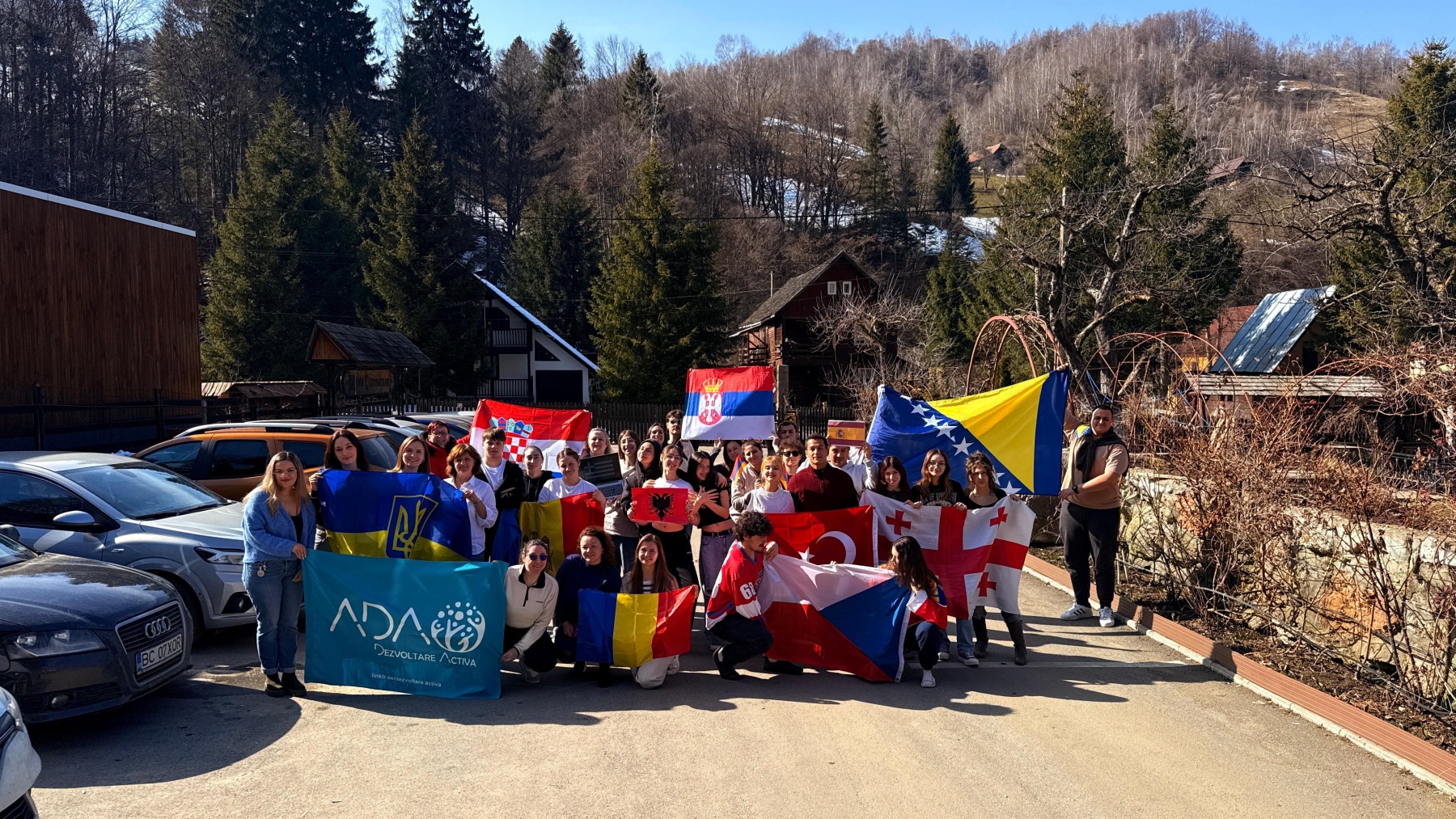
By bringing together youth workers from different countries, the training also creates a shared international learning space where participants can exchange experiences, reflect on common challenges in rural youth work, and strengthen their role as facilitators of participation and positive change at the local level.

PARTICIPANTS’ PROFILE – WHO IS THIS TRAINING FOR?

This training course is designed for youth workers and other professionals actively involved in the youth sector, particularly those working with young people from rural areas. The programme is suitable for participants with different levels of experience, from those who are at the beginning of their youth work journey to those with more experience who wish to explore new creative approaches.

Participants should be 18 years old or above and actively involved in youth work through non-governmental organisations, informal groups, or community initiatives, especially in rural or semi-rural contexts.

The training is addressed to: youth workers, youth leaders and peer educators, community organisers, project managers and coordinators working with young people, volunteer coordinators, active volunteers who are directly involved in youth activities, and who wish to further develop their competencies in youth work.

Participants should be motivated to strengthen their capacity to work effectively with rural youth through non-formal education, creative facilitation, and youth-led processes, using theatre and film as practical tools for participation, expression, and inclusion.

Participants are expected to:
• be motivated to explore creative and participatory methods in youth work,
• be open to hands-on, experiential learning and group work,
• actively contribute to the learning process and group dynamics,
• attend the entire duration of the training course (24 February – 5 March 2026),
• be willing to transfer the learning outcomes into their local youth work practice and contribute to follow-up activities,
• have a working knowledge of English, as the training will be conducted in English.
Participants must be active members, collaborators, or regular volunteers of their youth organisations. 

Recommended participant profile
This training course is particularly suitable for youth workers who: have good interpersonal and communication skills, are open, reflective, and motivated to learn, are interested in creative and participatory methods, have experience in youth work, volunteering, or non-formal education (at any level), can work in a team and contribute to group processes, are willing to experiment, reflect, and adapt methods to rural realities.

No prior experience in theatre or film is required, and artistic background alone is not a selection criterion. However, participants are expected to be actively involved in youth work and motivated to use creative methods with young people, particularly in rural contexts.


AIMS AND OBJECTIVES:

The overall aim of “ACTING FOR CHANGE: Theatre and film as tools for rural youth work” is to strengthen the competences of youth workers to intentionally use theatre and film methods in their daily youth work practice, to foster participation, inclusion, self-expression, and community engagement among young people living in rural areas.

Through this training course, we aim to:

1. Increase youth workers’ understanding of theatre and film as non-formal education tools, and their relevance for youth work in rural contexts, beyond artistic performance.
2. Equip participants with practical, accessible theatre and cinema methods that can be adapted to low-resource rural settings and different groups of young people.
3. Strengthen youth workers’ facilitation skills, with a focus on creating safe, inclusive, and participatory learning environments through creative processes.
4. Support youth workers in addressing sensitive topics (such as identity, emotions, belonging, and social challenges) using indirect, ethical, and youth-friendly artistic approaches.
5. Enhance participants’ ability to encourage youth participation and active citizenship by using storytelling and visual narratives to amplify young people’s voices at the local level.
6. Develop participants’ awareness of group dynamics, power relations, and inclusion, and how theatre and film methods can be used to reduce barriers to participation for young people in rural communities.
7. Foster peer learning and exchange of practices between youth workers from different countries, building a shared understanding of rural youth work challenges and solutions.
8. Support the transfer of learning into local practice by guiding participants to reflect on their role as facilitators and develop concrete follow-up actions to be implemented in their communities after the training.

TRANSVERSAL OBJECTIVES:

Promote inclusion and equal opportunities

Ensure an inclusive learning environment where all youth workers, regardless of background or experience, can fully participate. The training supports participants in using creative methods to engage young people facing fewer opportunities and reduce barriers to participation in rural contexts.

Foster participation in democratic and community life

Strengthen youth workers’ capacity to encourage active citizenship and participation among rural young people by using theatre and film as tools for dialogue, expression, and community engagement.

Develop key competences for lifelong learning

Support the development of essential competences such as communication, teamwork, creativity, critical thinking, and problem-solving, and explore how these can be fostered among young people through non-formal education.

Enhance digital competences and media awareness

Promote the meaningful and responsible use of digital and audiovisual tools in youth work, strengthening media literacy and supporting young people in creating and understanding visual stories.

Reinforce European values and international cooperation

Encourage intercultural learning, solidarity, and cooperation among youth workers from different countries, promoting shared European values through collaborative learning and exchange of practices.

Encourage sustainable and environmentally responsible practices

Integrate environmentally friendly practices throughout the training and inspire reflection on sustainability and environmental responsibility in youth work andcommunity life.

Support well-being and healthy youth work practice

Promote wellbeing as a foundation for learning and participation, encouraging emotional awareness, self-care, and healthy practices for both youth workers and the young people they support.

Možná se ti bude líbit