Erasmus+, Klíčová Akce 1: výměna mládeže
Časová osa této mobility:
-
Přípravné předprojektové setkání (Advance Planning Visit = APV): 12.—15. červen 2026, Arrouquelas, Rio Maior, Portugalsko. Tohoto setkání se zúčastní jeden zástupce za český tým (jeden group leader). V tomto termínu se setkají organizátoři se zástupci všech národních skupin, projdou si místo konání a proberou program aktivit nadcházející výměny mládeže. Group leader se musí zúčastnit jak APV v březnu tak samotné výměny mládeže v červenci.
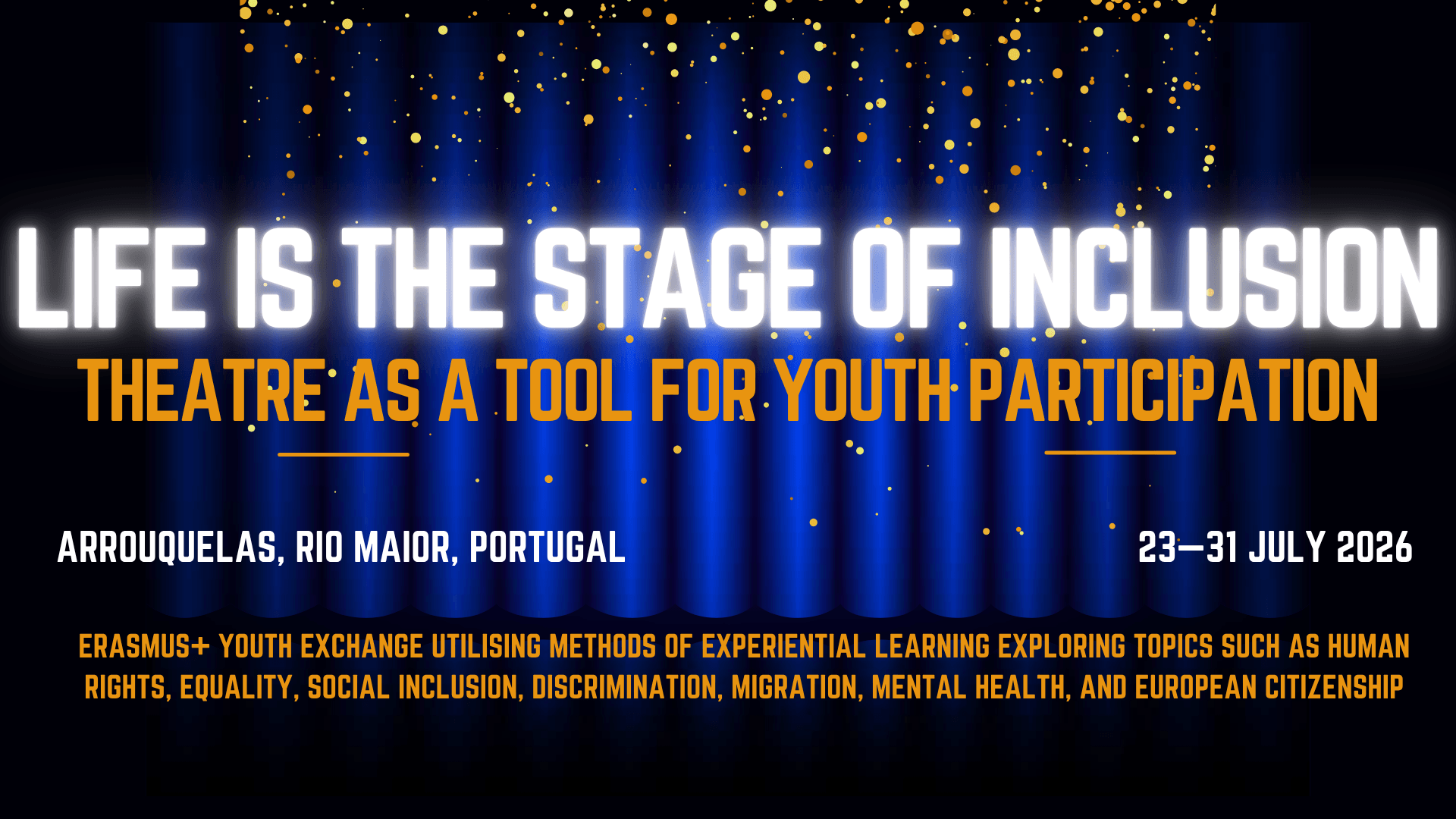
- Výměna mládeže: Arrouquelas, Rio Maior, Portugalsko, 23.—31. červenec 2026.
Český tým: 5 účastníků (ve věku 13-15 let) + 2 group leadeři (ve věku 25+)
Před tím, než se přihlásíte na jakýkoliv náš projekt, důkladně si přečtěte všechny informace v sekci Chci vyjet na projekt a seznamte se s Pravidly účasti na zahr. projektech.
Místo group leadera je obsazeno. Pokud máte zájem se na tento projekt přihlásit, prosím důkladně si přečtete info-pack. Pokud máte zájem se na tento projekt přihlásit, prosím odešlete vyplněnou přihlášku co nejdříve.
Pro to, abyste se na tento projekt přihlásili je nutné, abyste vlastnili nejen občanský průkaz (který musíte mít ze zákona), ale také platný cestovní pas (s platností min. ještě 150 dní od datumu začátku vámi vybraného projektu).
V rámci programu ERASMUS+ jsou následující finanční specifika: v rámci všech projektů je kompletně (ze 100%) zajištěno jídlo, ubytování, aktivity, a to vše je zcela pokryto z fondů EU programu ERASMUS+ a zařízeno organizátory. Účastníkům dále budou proplaceny reálně vynaložené cestovní náklady (reimbursement) z místa bydliště do místa konání projektu a to max. rozpočtu €395/účastník.
Hostitelská organizace: “H2O” – Associação de Jovens de Arrouquelas
Popis projektu:
The project “Life is the Stage of Inclusion – Theatre as a Tool for Youth Participation” is a youth exchange within the Erasmus+ Programme (Key Action 1–Youth Exchanges), implemented under the Erasmus Accreditation of “H2O” – Associação de Jovens de Arrouquelas.
The project will take place in Rio Maior, Portugal, at the Rio Maior School Cluster (Agrupamento de Escolas de Rio Maior), bringing together young people from different European countries with the aim of exploring theatre and artistic expression as tools for social inclusion, youth participation, and intercultural dialogue.
The initiative is based on the idea that artistic expression can function as a universal language, capable of overcoming linguistic, cultural, and social barriers. In a European context marked by diversity, theatre creates a safe and participatory space where young people can share experiences, reflect on common social challenges, and develop essential competencies for active citizenship.
During the exchange, participants will work collaboratively using non-formal education methodologies, applying different theatrical techniques and forms of artistic expression to explore topics relevant to European youth, such as human rights, equality, social inclusion, discrimination, migration, mental health, and European citizenship.
The project promotes a participant-centred approach, encouraging young people to take an active role in the learning process. Through the collective creation of stories, scenes, and performances, participants will have the opportunity to reflect on the realities of their countries and communities, promoting empathy, intercultural understanding, and respect for diversity.
The exchange will culminate in the creation and presentation of short theatrical performances or artistic interventions, developed by the young participants themselves, reflecting the themes explored throughout the project. These activities aim to stimulate creativity, strengthen teamwork, and encourage young people to become active agents of change in their communities.
Organisation and Venue:
The project will be organised by H2O – Associação de Jovens de Arrouquelas, a youth organisation dedicated to promoting youth participation, non-formal education, cultural exchange, and the development of personal and social competencies. The activities will take place at the Rio Maior School Cluster (Agrupamento de Escolas de Rio Maior), which will provide the necessary facilities for the educational and artistic programme. Part of the theatre activities will be carried out in the Drama LEB space, an educational environment dedicated to dramatic and artistic expression, suitable for participatory theatre exercises, improvisation, and collective creation.
Accommodation and Logistics:
During the exchange, participants will be accommodated at the Rio Maior School Cluster, using a classroom camping-style accommodation, ensuring a safe, supervised environment appropriate for the participants’ age group. Meals will be provided in the school canteen, allowing participants to share informal intercultural moments during mealtimes.
The school facilities provide suitable spaces for workshops, group activities, rehearsals, and theatrical performances, creating an educational and community environment that supports intercultural learning.
Participants:
The project will involve partner organisations from different European countries, ensuring cultural diversity and balanced participation. Each partner organisation will be represented by:
• 6 young participants, aged 12 to 15 years old
• 2 group leaders, over 18 years old
Each national team has to be gender balanced (= equal number of males and females in each team).
Group leaders will play an active role throughout the exchange, participating in all activities and supporting the young participants during the learning process, while ensuring the well-being and positive group dynamics.
Methodology:
The project will be implemented using non-formal education methodologies, focusing on experiential learning, active youth participation, and intercultural cooperation.
The main methodologies can include:
- Participatory theatre, encouraging young people to create stories and characters based on their own experiences.
- Theatre of the Oppressed, inspired by the method of Augusto Boal, allowing participants to analyse situations of exclusion or discrimination and explore collective solutions.
- Theatrical improvisation, stimulating creativity, spontaneity, and communication.
- Body expression and non-verbal communication, facilitating participation even when language barriers exist.
- Intercultural group work, promoting cooperation and the exchange of experiences among young people from different countries.
- Structured reflection and evaluation moments, allowing participants to consolidate learning outcomes and assess the impact of the project.
These methodologies will enable young people to develop competencies such as communication, creativity, empathy, critical thinking, teamwork, and self-confidence, while reinforcing European values such as solidarity, diversity, inclusion, and democratic participation.
Throughout the project, participants will be encouraged to transform their experiences and reflections into collective artistic creations, contributing to greater social awareness and the development of an active, inclusive, and participatory European citizenship.